
Design-Build vs. Hard Bid for Luxury Construction: Which Actually Protects Your Budget?
The two delivery methods behave very differently on high-end projects. Here is how each handles pricing, risk, change orders and accountability — and how to choose.
Delivery method is one of the earliest and most consequential decisions on a luxury project, and it is usually made casually. The choice determines when you learn your real price, who absorbs coordination risk, and how change orders are handled for the following eighteen months.
The two models
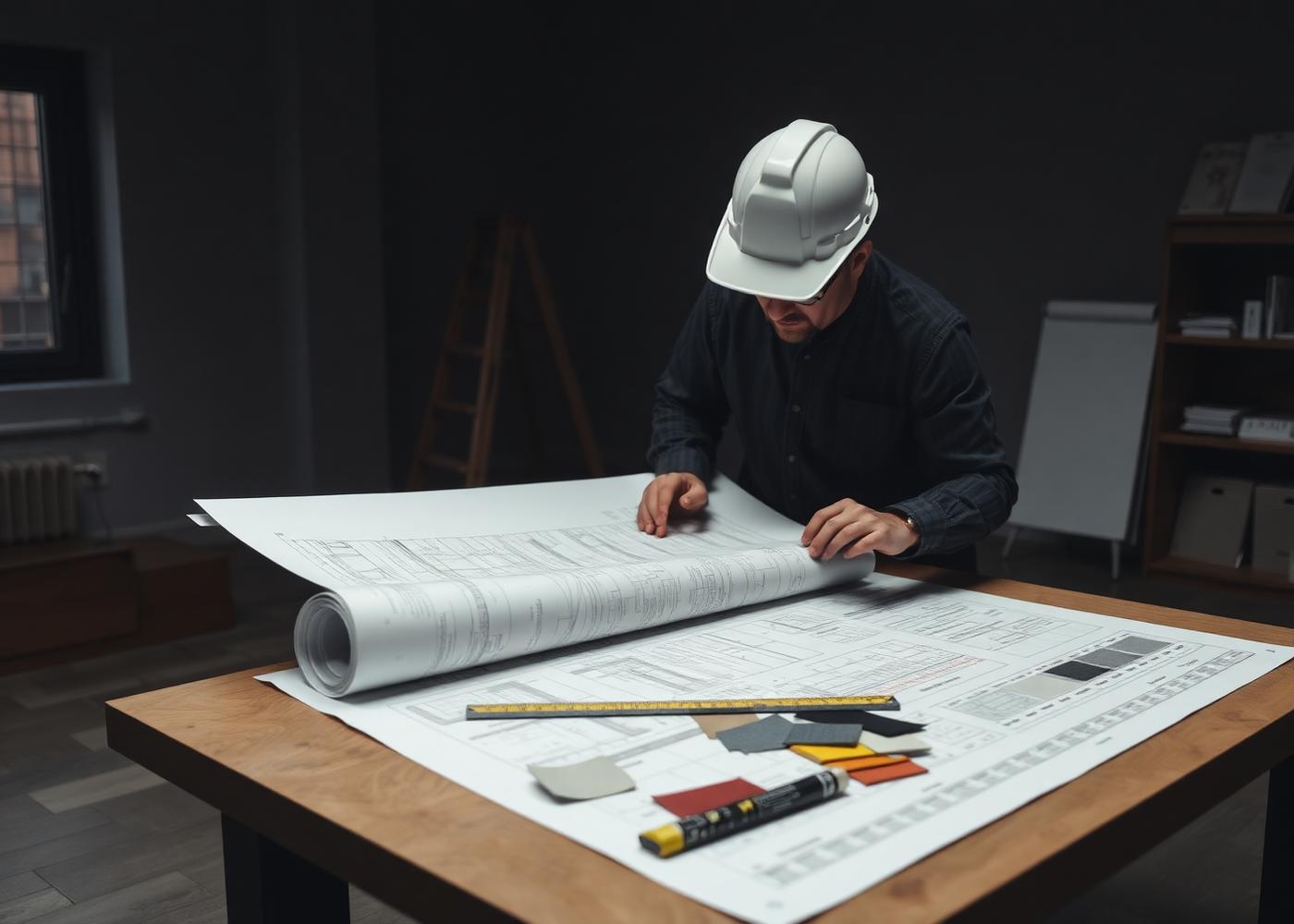
Hard bid (design-bid-build). The owner engages an architect, completes the design, and then puts the finished drawings out to multiple general contractors. The lowest or best-value bid wins and builds it. Design and construction are separate contracts.
Design-build. The owner engages a single entity responsible for both design and construction. Pricing develops alongside the design, and the builder is involved from the earliest concept.
Many luxury projects also use a hybrid: an owner-selected architect paired with a builder brought on early under a pre-construction agreement, with a negotiated contract — often a guaranteed maximum price (GMP) or cost-plus with a cap. In practice this hybrid captures most of design-build's advantages while preserving the owner's choice of architect.
Hard Bid
Design fully, then competitively price it.
- Direct, transparent price comparison
- Owner controls design independently
- Well suited to repeatable, fully-documented scope
- Real price arrives late, after design spend
- Coordination gaps become change orders
- Adversarial posture between design and construction
Design-Build
One team carries design and construction risk.
- Budget feedback while design is still fluid
- Single point of accountability
- Procurement and long-lead items start earlier
- Requires transparent, open-book pricing
- Owner must vet the builder more carefully upfront
Where hard bid works well
- The scope is fully defined and unlikely to change.
- The owner values documented competitive pricing above speed.
- The project is conventional enough that drawings can be priced accurately by multiple contractors.
- The owner or their representative has the time and expertise to manage two separate contracts and the gaps between them.
Where hard bid struggles on luxury work
You learn your price last. Design proceeds for months with no market pricing. When bids arrive above budget, the choices are to redesign — losing time and design fees — or to reduce quality late.
Low bids invite exclusions. In a competitive bid, the winner is often the contractor who read the drawings most optimistically. Gaps and exclusions surface as change orders once work begins.
Coordination risk sits with the owner. If the drawings conflict, the contractor builds what is drawn and issues a change order. The owner sits between architect and builder.
Bespoke scope prices poorly on paper. Custom millwork, imported stone, specialty glazing and complex mechanical systems are exactly the scopes that require builder input during design — which hard bid structurally prevents.

Where design-build (or early builder involvement) is stronger
Continuous pricing. Cost feedback arrives while decisions are still inexpensive to change. Value engineering happens with the architect at the table instead of in the field.
Constructability review during design. The builder flags detailing, sequencing and long-lead issues before they are drawn into the documents.
Single point of accountability. When one entity owns design and construction, coordination gaps are internal problems rather than owner-funded change orders.
Earlier procurement. Long-lead items — glazing, elevators, custom cabinetry, imported stone — can be released earlier, which compresses the overall schedule more than any field productivity gain.
Faster start. Site work and foundations can begin while interior documentation continues, if permitting allows.
The legitimate concern about design-build — and how to address it
The fair criticism is transparency: if one party controls both design and price, how does the owner know the price is competitive?
Good design-build answers this contractually:
- Open-book accounting. The owner sees actual subcontractor bids and invoices.
- Competitive subcontractor bidding. Each trade package is bid to a qualified list the owner can review.
- Defined fee and general conditions. The builder's fee is stated, not embedded.
- GMP with shared savings. The owner holds a cap; underruns are shared or returned.
- Owner's representative or independent estimator. An outside check on pricing at defined milestones.
With those provisions, design-build offers price transparency that hard bid — where you see one number and a set of exclusions — often does not.
How to decide
Ask four questions:
- 01How defined is your scope? Highly defined and unlikely to change favors hard bid. Evolving or bespoke favors design-build.
- 02What matters more, lowest documented bid or schedule and coordination certainty?
- 03How much of your own time can you commit? Hard bid demands more owner and architect management.
- 04How complex is the site? Coastal, waterfront, historic and constrained sites reward early builder involvement heavily.
The question is not which contract type is better. It is how early you want to know the truth about your budget.
MEGA Contractors
What we see on high-end South Florida projects
On coastal and waterfront work in Palm Beach, Broward and Miami-Dade counties, early builder involvement almost always outperforms pure hard bid — because the variables that break budgets here are site conditions, code and product approvals, and long-lead procurement. All three are best addressed during design.
The most reliable structure we see is: owner's chosen architect, builder engaged early under pre-construction, competitive subcontractor bidding, open books, and a guaranteed maximum price set once the documents are complete. It preserves design quality, delivers real pricing early, and leaves the owner with one accountable party during construction.
Questions we hear most
- Is design-build more expensive than hard bid?
- Not inherently. Hard bid can produce a lower initial number and a higher final cost once exclusions and change orders are settled. Design-build with open books, competitive trade bidding and a guaranteed maximum price gives you visibility into both.
- Can I keep my own architect and still get design-build advantages?
- Yes. Engaging your builder early under a pre-construction agreement gives you constructability review, continuous pricing and early procurement while you retain your chosen architect.
- What is a guaranteed maximum price?
- A contract cap on the owner's cost. Costs are billed openly up to that ceiling, and savings below it are typically returned or shared per the contract.
Sources & authorities
Code, permitting and hazard requirements change. Each reference below links to the issuing authority so you can confirm the current requirement for your address.
- 01Design-Build Institute of America — what design-build is and how it is delivereddbia.org
- 02AIA Contract Documents — standard owner, architect and contractor agreementsaiacontracts.com
- 03Florida Statutes Chapter 489 — Contractingleg.state.fl.us
- 04Florida DBPR — verify a contractor licensemyfloridalicense.com
- 05Florida Building Commission — Florida Building Code (official code portal)floridabuilding.org
References verified August 12, 2026
Written By
MEGA Contractors Editorial Team
Construction Team
[PLACEHOLDER — add a verified author biography before publishing.]
Last reviewed August 12, 2026
Related insights
Commercial Build-Out Permitting in Miami-Dade County: A Practical Guide
A sequenced walkthrough of what it actually takes to permit and deliver a commercial interior build-out in Miami-Dade — and where tenants and owners most often lose weeks.
July 31, 2026
What It Costs to Build a Custom Home in Palm Beach County
A candid breakdown of how luxury custom home budgets are actually structured in Palm Beach County — where the money goes, which line items move most, and how to build a budget that survives contact with reality.
August 9, 2026