What It Costs to Build a Custom Home in Palm Beach County
A candid breakdown of how luxury custom home budgets are actually structured in Palm Beach County — where the money goes, which line items move most, and how to build a budget that survives contact with reality.
Almost every custom home conversation begins with the same question: what will it cost per square foot? It is an understandable starting point and a poor planning tool. Two homes of identical size on the same street in Palm Beach County can differ by several million dollars based on site conditions, structural system, glazing package, and the level of finish carpentry. A per-square-foot figure describes a completed project in hindsight; it does not price the one you are planning.
What follows is how experienced builders actually structure a luxury residential budget, and where the real variability lives.
Start with the site, not the square footage
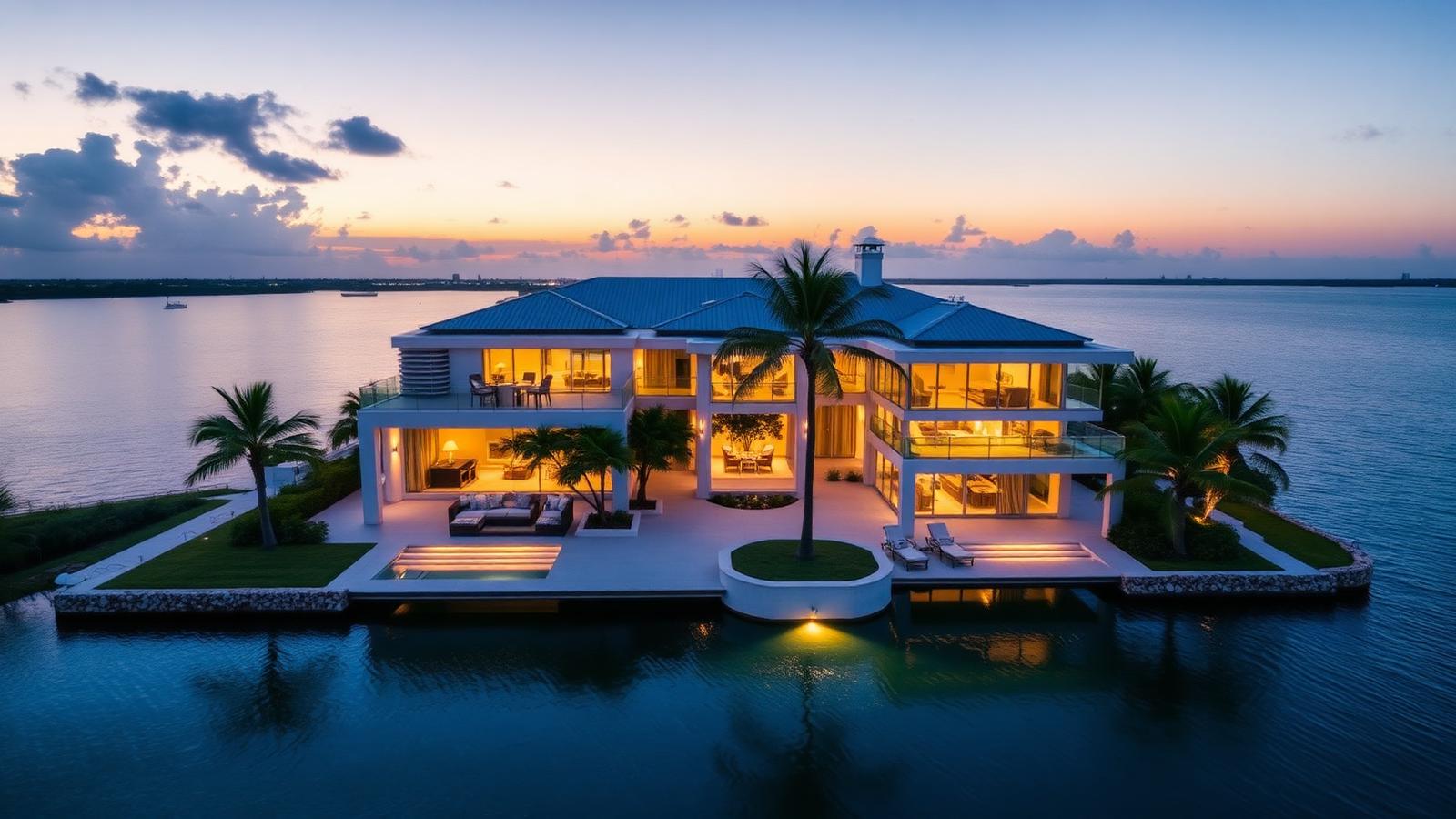
Before a single interior decision matters, the land dictates a large portion of the budget. In Palm Beach County the drivers are consistent:
- Flood zone and required finish floor elevation. A required elevation above existing grade means fill, stem walls or an elevated structural slab — all of which add cost before you are out of the ground.
- Soil and bearing conditions. Sandy soils and high water tables are common. Foundations may need over-excavation, engineered fill, or in some cases piles.
- Demolition of an existing structure. Most infill lots in established neighborhoods are teardowns. Demolition, asbestos survey, tree protection and utility disconnects all carry cost and schedule.
- Utility and drainage work. Stormwater retention, sewer connections, and underground service upgrades are frequently underestimated.
- Access. Narrow barrier-island streets, gated communities with restricted hours, and neighboring properties within a few feet all reduce productivity and increase logistics cost.
A rigorous builder prices these conditions during pre-construction with a survey, geotechnical report and a permitting review — not with an assumption.
4
Trade packages that drive most of the budget spread
8-14 wks
Typical pre-construction and permitting window
10%
Contingency we recommend carrying at contract
3x
Cost range within code-compliant glazing
The line items that move the most
Once the site is understood, four categories account for most of the spread between a well-built home and an exceptional one:
1. Structure and envelope. Reinforced concrete, structural steel and tie-beam systems used on coastal properties cost meaningfully more than conventional framing. The envelope — roofing, waterproofing, stucco or stone cladding — carries the burden of the climate and is not a place where savings age well.
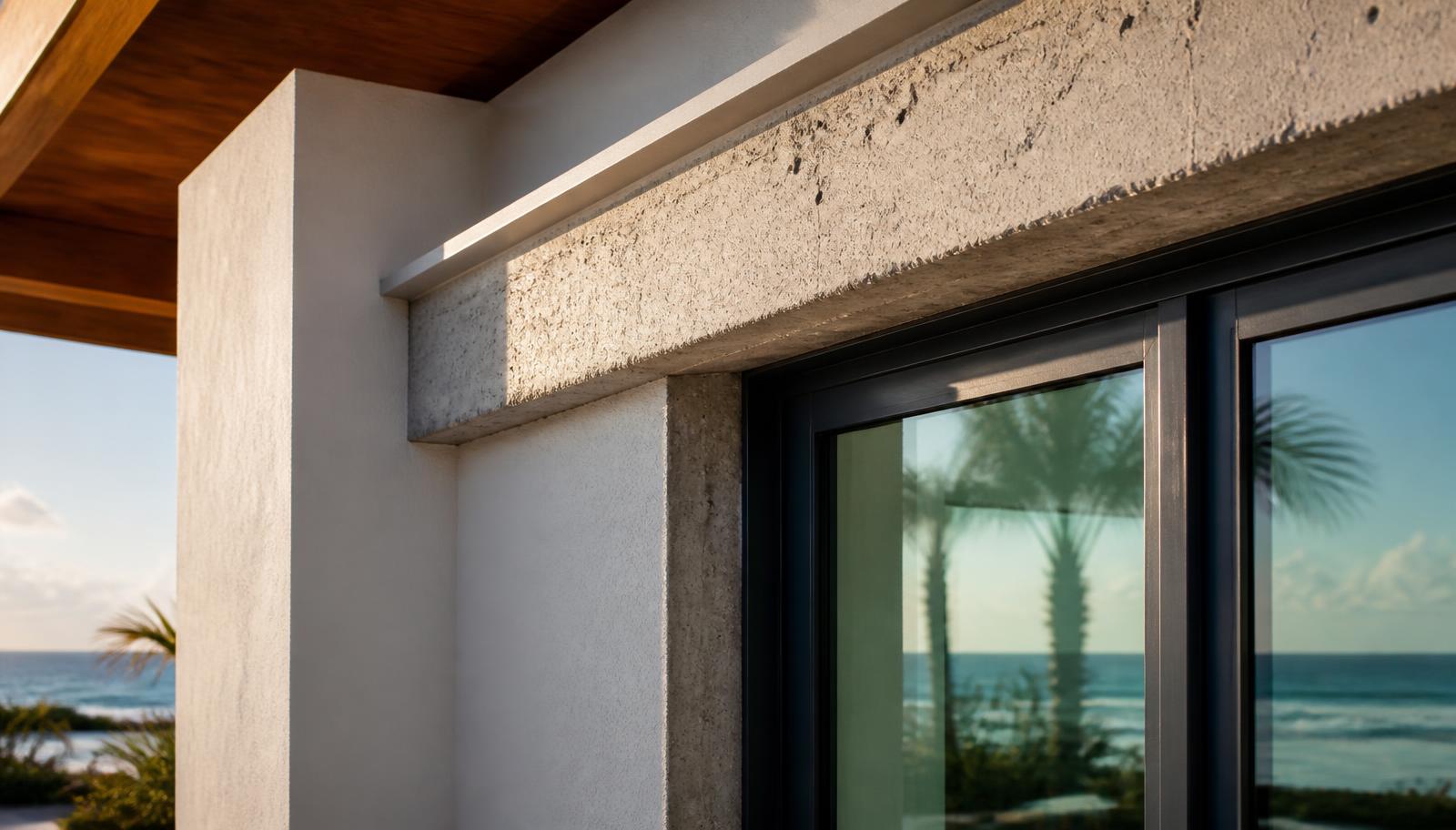
2. Glazing. Impact-rated glass is required, but the range within compliance is enormous. Standard impact windows and a large-format, thermally broken, custom-anodized sliding wall are both code-compliant and separated by an order of magnitude in cost. On a modern waterfront home, glazing is often one of the three largest trade packages.
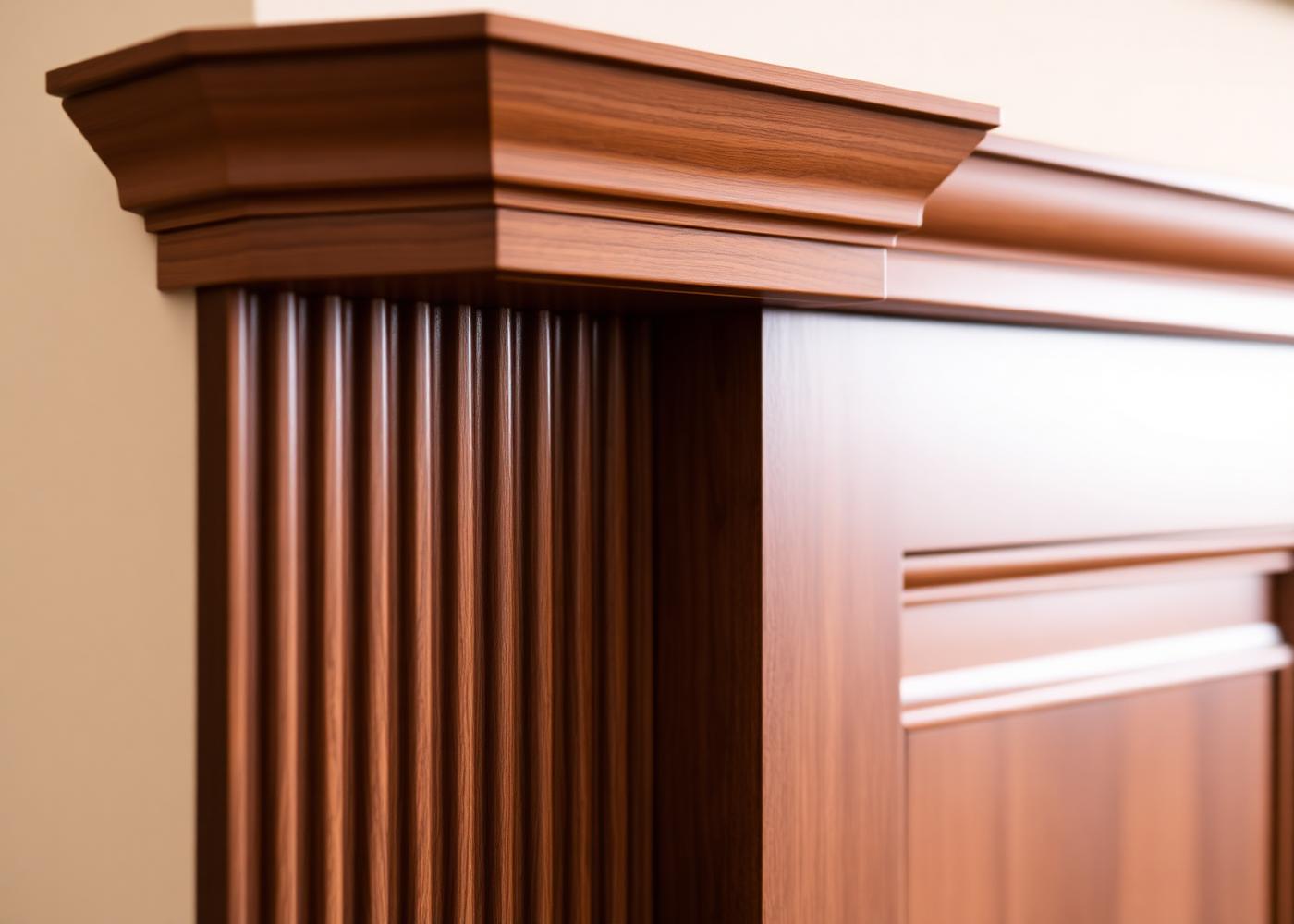
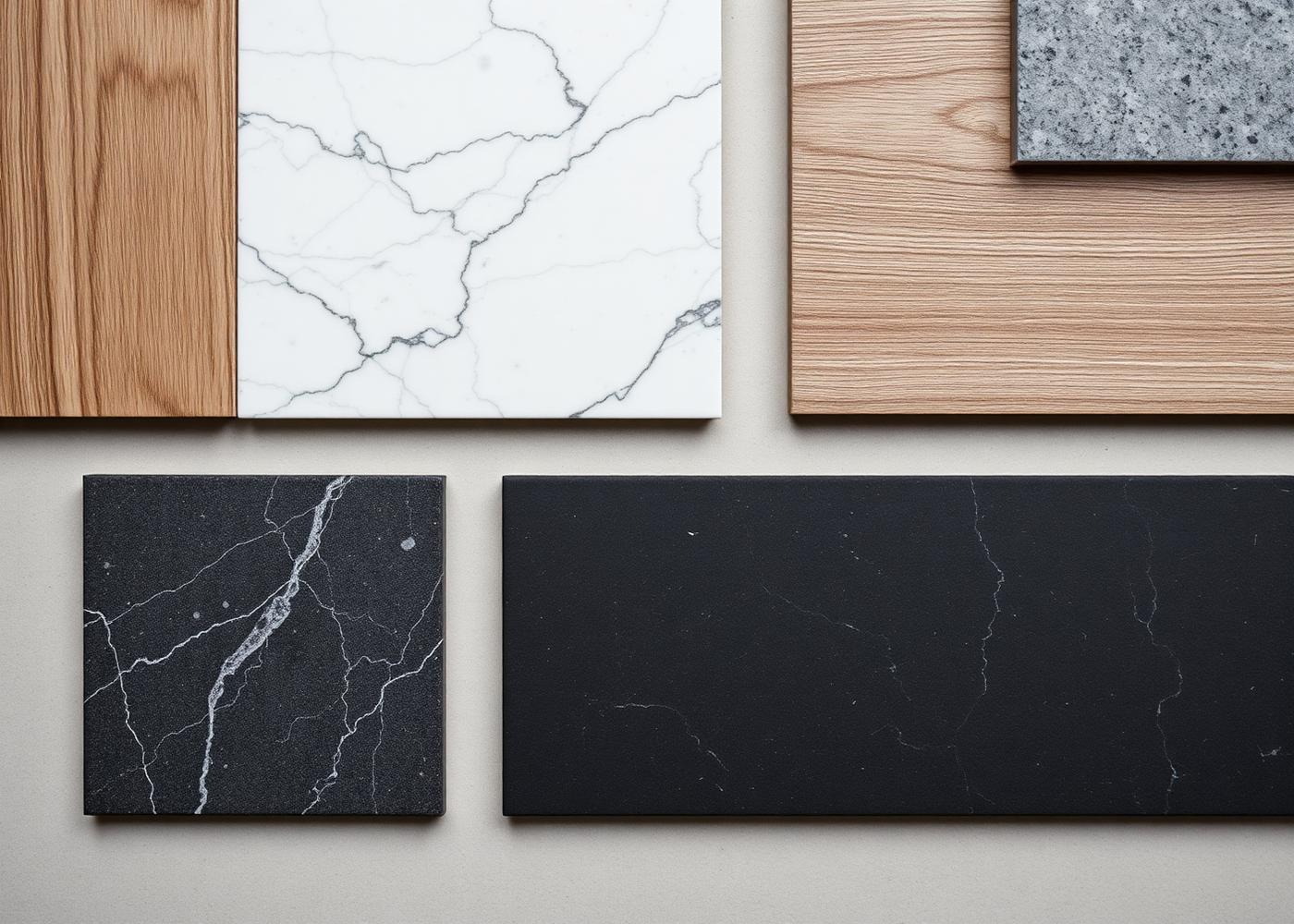
3. Millwork, stone and finish carpentry. This is where luxury budgets diverge most sharply. Book-matched slabs, integrated appliance panels, ceiling detail, and custom closets are labor-intensive and material-intensive. It is also the category most often left as an "allowance," which is where budgets quietly fail.
4. Mechanical, electrical, plumbing and technology. Humidity control, dehumidification, generator systems, water treatment, lighting control, shading and low-voltage infrastructure add up quickly and must be designed early, not added late.
Where a luxury residential budget typically concentrates
- Structure & envelope30%
Reinforced concrete, roofing, waterproofing and cladding.
- Glazing & exterior openings18%
Impact-rated systems, from standard units to large-format sliding walls.
- Millwork, stone & finish carpentry22%
The category where luxury budgets diverge most sharply.
- MEP & technology18%
Dehumidification, generator, water treatment, lighting and low-voltage.
- Site, pool & landscape12%
Fill, drainage, hardscape and exterior living.
Illustrative distribution for a coastal Palm Beach County residence. Every project is priced from its own drawings, site conditions and specification.
Soft costs are not small
Owners routinely budget the building and forget the rest. Plan for architecture and interior design fees, structural, civil, MEP and landscape engineering, surveys, geotechnical work, permit and impact fees, testing and inspections, insurance, and financing costs. On a luxury residence these together commonly represent a substantial share of the total project cost, and they are spent before construction is visibly underway.
Why allowances are the most dangerous number in your budget
An allowance is a placeholder for a scope that has not been selected yet — plumbing fixtures, appliances, stone, lighting. Placeholders set low make an early budget look attractive and guarantee a later increase. When you review a proposal, look at the allowance schedule first and ask two questions: what specific product does this allowance actually buy, and what happens to the schedule if the selection changes after the trade is bought out?
A credible builder will show you real product-level pricing for the allowance amount, not a round number.
Contingency is a plan, not an admission of doubt
Every serious luxury project carries a contingency. Early in design, when documents are conceptual, the contingency should be larger; as drawings, selections and subcontractor pricing firm up, it can be reduced. Renovation and coastal work warrant more. Contingency is not padding — it is the difference between absorbing an unforeseen condition and stopping the job while a change order is negotiated.
How to build a budget that holds
- 01Pre-construction first. Pay for a proper pre-construction phase. Site investigation, code review, constructability review and early trade pricing cost a fraction of what they save.
- 02Price the design you have, then value-engineer intentionally. Reductions made with the architect at the table preserve the design intent. Reductions made in the field do not.
- 03Buy out long-lead scopes early. Glazing, elevators, custom millwork and imported stone drive the schedule. Locking pricing early removes both cost and time risk.
- 04Convert allowances into selections. Set a selection calendar in pre-construction and hold to it.
- 05Insist on open-book reporting. Monthly cost reports with committed, spent and forecast columns let you steer while there is still room to steer.
A per-square-foot number describes a house that has already been built. It does not price the one you are planning.
MEGA Contractors pre-construction team
The honest answer
A responsible builder will not give you a firm number before understanding your site, your program and your finish level. What they should give you early is a range with the assumptions written down — and a process for narrowing that range to a real, defensible price before you commit.
If you are planning a custom residence in Palm Beach, Broward or Miami-Dade County, that pre-construction conversation is the right first step.
Questions we hear most
- Is cost per square foot a useful way to budget a custom home?
- Only as a rough historical reference. Site conditions, structural system, glazing and finish level create far more variation than size alone, so a per-square-foot figure cannot price a home that has not been designed and investigated.
- What usually causes luxury home budgets to increase during construction?
- Underfunded allowances, unforeseen site or existing-structure conditions, and late design changes. Each is largely controllable through a disciplined pre-construction phase.
- How much contingency should a luxury build carry?
- More early in design and less as drawings, selections and subcontractor pricing are finalized. Coastal work and renovations warrant more than a straightforward new build.
Sources & authorities
Code, permitting and hazard requirements change. Each reference below links to the issuing authority so you can confirm the current requirement for your address.
- 01Florida Building Commission — Florida Building Code (official code portal)floridabuilding.org
- 02Palm Beach County Planning, Zoning & Building — Building Divisiondiscover.pbc.gov
- 03ASCE 7 Hazard Tool — design wind speeds by site addressascehazardtool.org
- 04Florida Statutes Chapter 713 — Construction Lien Lawleg.state.fl.us
- 05Florida DBPR — verify a contractor licensemyfloridalicense.com
References verified August 12, 2026
Written By
MEGA Contractors Editorial Team
Construction Team
[PLACEHOLDER — add a verified author biography before publishing.]
Last reviewed August 12, 2026
Related insights

Design-Build vs. Hard Bid for Luxury Construction: Which Actually Protects Your Budget?
The two delivery methods behave very differently on high-end projects. Here is how each handles pricing, risk, change orders and accountability — and how to choose.
August 3, 2026
Florida Building Code: Impact Windows, Wind Load and Coastal Requirements
What the Florida Building Code actually requires of openings, envelopes and structures in South Florida's High-Velocity Hurricane Zone — and where luxury projects should exceed the minimum.
July 28, 2026